
Ask a Grade 4 class and a Grade 10 class the same question: “Whose job is it to make sure an AI is fair?” You should get very different answers, and both can be right for their age. A single ethics unit can’t do that. It freezes one answer at one moment and then moves on.
The trouble with a one-off ethics unit
A single unit has two problems. If it comes early, students haven’t learned the mechanism yet, so the discussion stays general. If it comes late, they have already formed habits. Either way it teaches ethics as a topic, when in practice ethical questions turn up inside every technical unit: about data, about errors, about who uses the system.
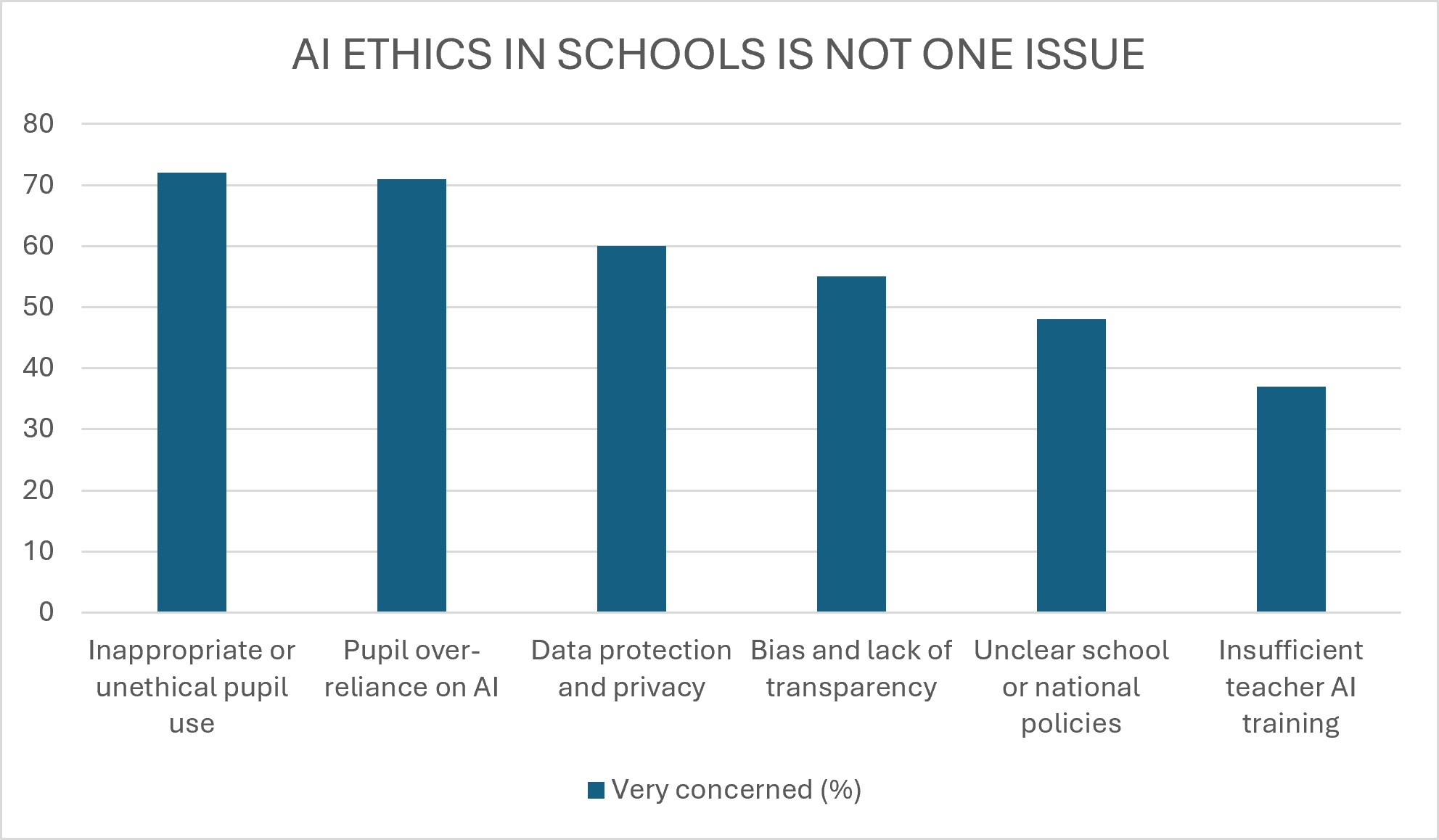
If responsible AI appears in only one unit, what happens when students meet ethical questions everywhere else?
What “returning” should mean
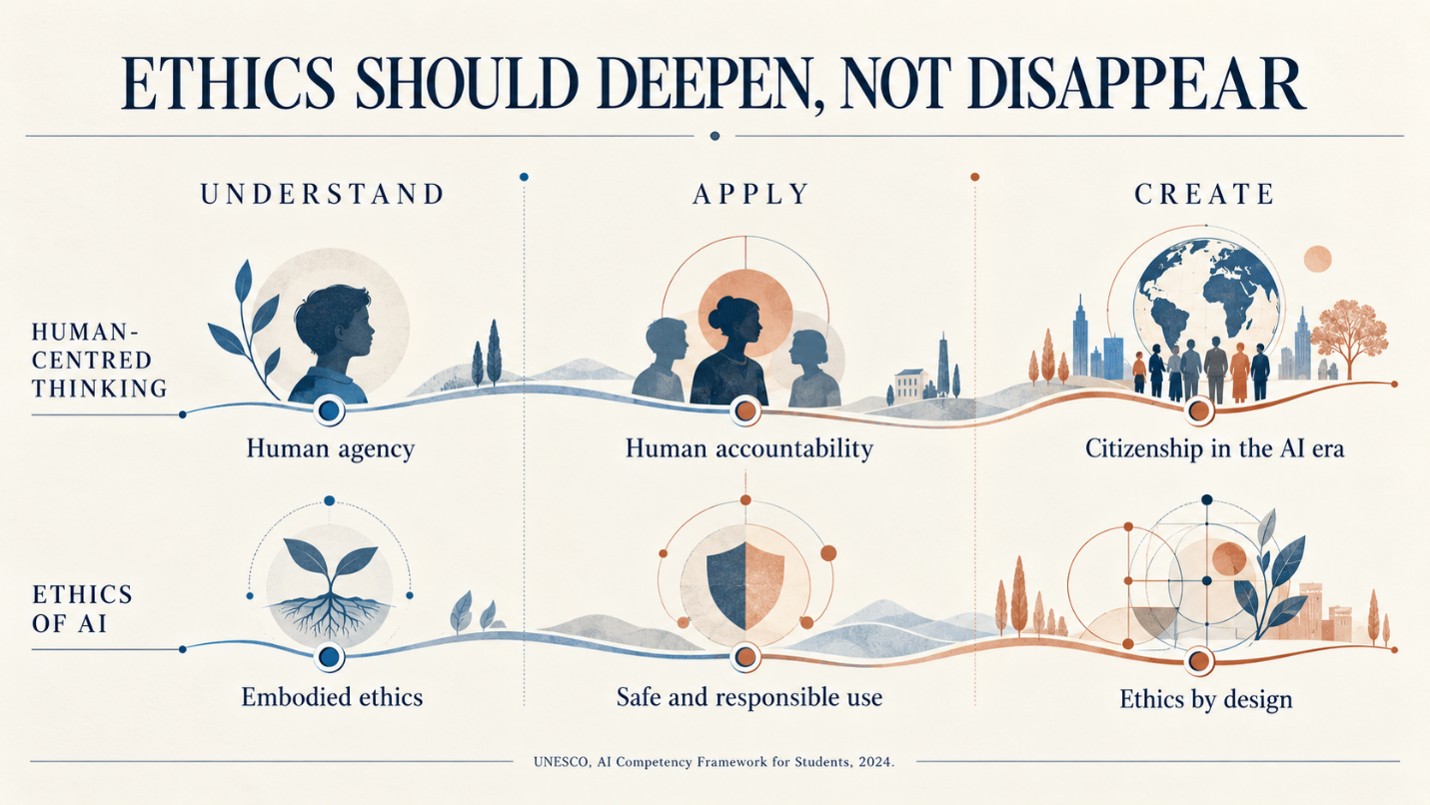
Returning to ethics does not mean giving students the same lesson every year. It means the same question comes back, and students can answer it with more evidence each time. As they grow, three things change. They move from gut feeling to evidence, from looking at one system to looking at the people around it, and from stating an opinion to defending a position. The APEX curriculum shows how this can work. In the early years, students learn that machines make mistakes, that AI needs examples, and that people make AI. By Grades 3 to 5, they ask whether a system is fair and who is responsible, and they learn that accuracy can be misleading. In Grades 6 to 8, they ask who controls a system and whether they can trust what it says, through topics like surveillance and consent, hallucination and attribution. In Grades 9 and 10, they ask what a mistake costs and what a system was rewarded for. By Grades 11 and 12, they ask how AI should be governed, and they defend a policy brief to an external panel. One question runs through all of it: “whose job is it?” Students first hear it in Grade 1, when they learn that every AI is made by people. By Grade 12 they are naming the accountable body in a policy brief. The question stays the same, and the students’ ability to answer it grows. This is the same logic as progression across school years.
Ethics that is assessed
If ethics isn’t assessed, it becomes optional. APEX “Stop and Think” panels require students to take a position and give a reason. From Grade 5 upward, one of the assessment dimensions in the source document is ethical reasoning. It asks whether reasoning is evidence-based rather than “good versus bad”. The standards map also links the ethics thread to CASEL and IEEE-AI. Treat that as alignment. It shows where ethics is planned, not that students have achieved it.
Closing thought
Students meet AI every year, so they should meet its ethical questions every year, each time with more understanding.
FAQs
Q: Isn’t a dedicated ethics unit enough?
It is a strong anchor, and APEX has one in Grade 4. But it works best as the start of a thread, not the whole thread.
Q: How do we avoid repeating the same lesson every year?
Change the mechanism and the stakes. Grade 4 discusses fair treatment. Grade 9 asks what a false negative costs. Grade 10 asks what a reward function encourages.
Q: Who teaches ethics if our teachers aren’t specialists?
They need facilitation support, not just content. Look for scripts, expected student responses and misconception guidance, as in the APEX Teacher Guides. The algorithmic bias topic is a good place to test a teacher’s confidence.