Two schools both say they “teach AI.” One runs prompt-writing workshops. The other has students train a small classifier and explain why it gets some cases wrong. Same label, different learning. Both may be worth doing, but they are not the same thing, and school plans often blur them.
Two words that get mixed up
These are our working definitions:
- AI skills are the ability to use AI tools well: writing a clear prompt, checking an output, choosing the right tool, using it safely.
- AI literacy is understanding how AI systems work, what they cannot do, and how they affect people.
Skills help students do things with AI. Literacy helps them decide whether to trust it.
What recent frameworks say
What the sources say. The OECD and European Commission AI Literacy Framework describes AI literacy as “a set of knowledge, skills and attitudes” that “equips learners to understand how AI systems work, critically evaluate their outputs and use them ethically and creatively.” Its competences sit in four domains: Engage with AI, Create with AI, Manage AI and Shape AI. The framework’s site says it contributes to the innovative domain of PISA 2029. A draft came out in May 2025, and the OECD publication page for the final version is dated 17 June 2026.
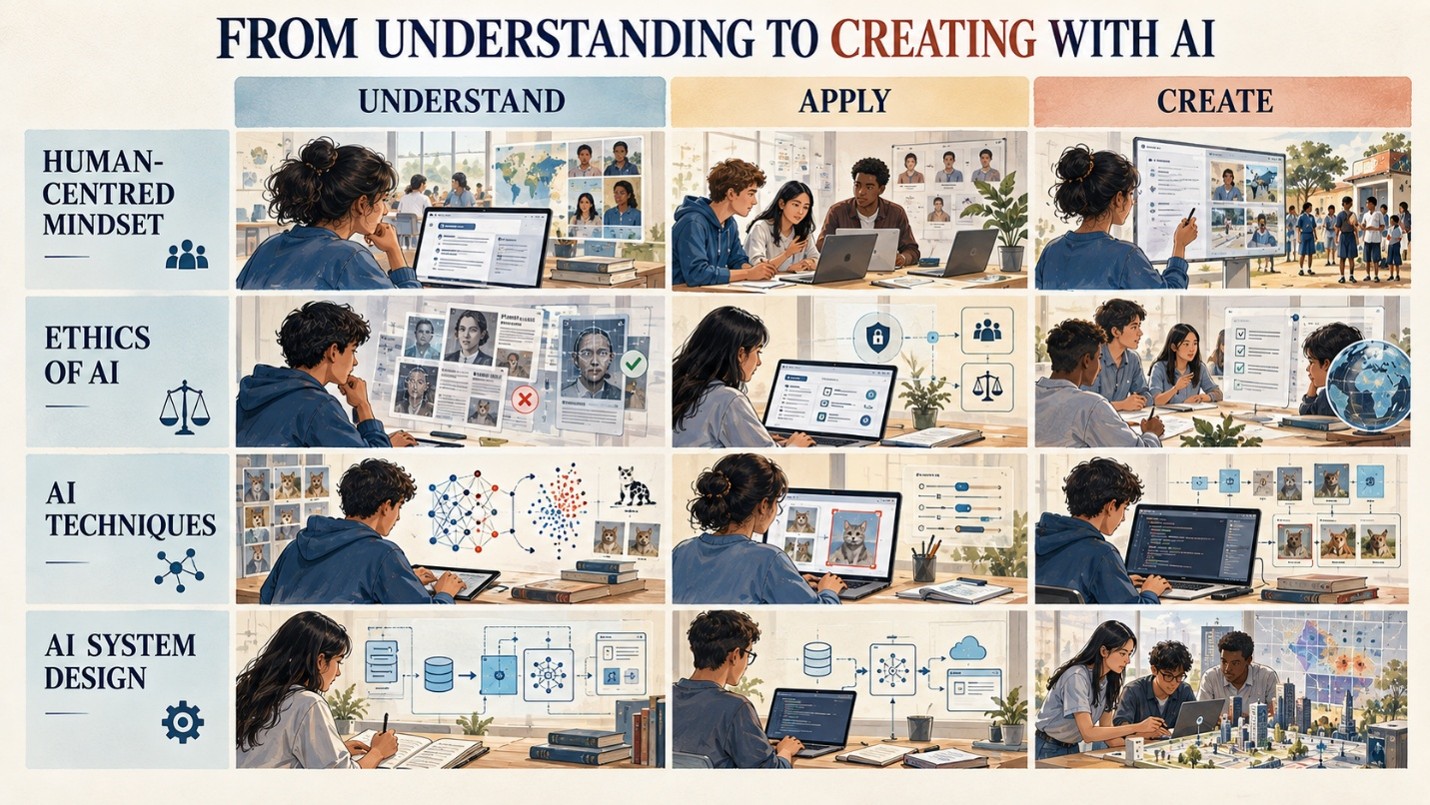
UNESCO’s 2024 AI competency framework for students takes a similar approach. It has four dimensions (human-centred mindset, ethics of AI, AI techniques and applications, AI system design), three progression levels (understand, apply, create) and 12 competencies.
Our reading. Neither framework is a list of tools. Both treat using AI as one part of a wider aim: understanding, judgement and agency. Skills matter, but they sit inside literacy.
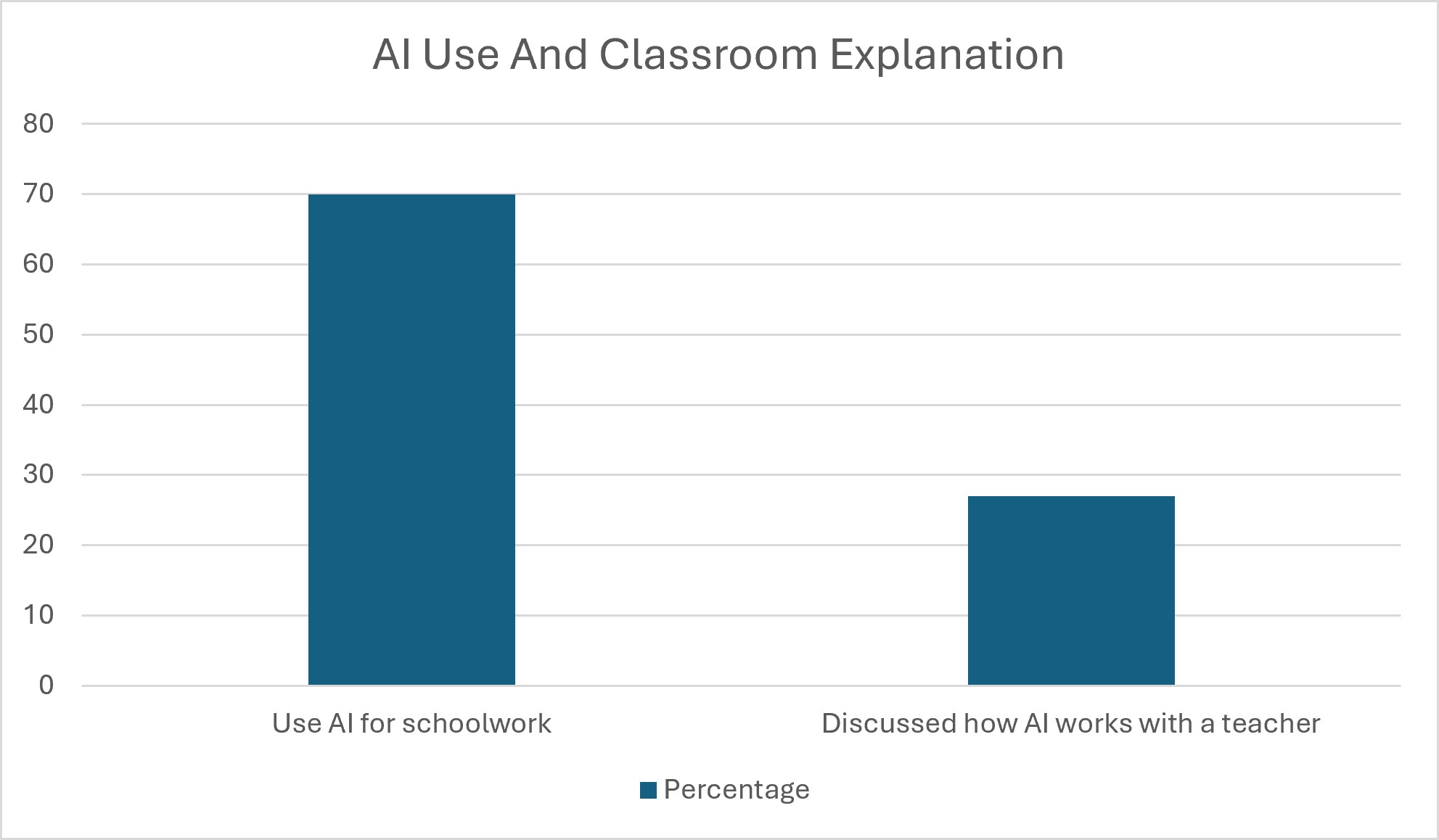
Source: Common Sense Media, Teens in the AI Era: Schoolwork and Skills That Matter, August 2026.
The difference at a glance
| Topic | AI literacy | AI skills |
| Main question | How does this work, and should I trust it? | How do I get this done with it? |
| Typical evidence | Explains why a model made an error | Produces a good result with a tool |
| Shelf life | Longer, because ideas change slowly | Shorter, because tools change often |
| Where it lives | A planned curriculum, revisited across years | Practice across subjects |
| Risk if missing | Students trust outputs they cannot judge | Students understand AI but cannot work with it |
Why schools need to define both
A school that only teaches skills gets confident users who cannot judge what they use. A school that only teaches literacy gets thoughtful students who have little practice. Here is a simple way to start:
- Write one sentence for each. Keep it short enough that a parent could read it.
- Give each an owner. Skills usually sit across subjects. Literacy usually needs timetable time and a sequence.
- Decide the evidence. For skills, can the student do it well? For literacy, can the student explain it?
If students can use an AI system but cannot explain why it produces errors, what exactly have they learned?
For the next step, see what students should be able to do after an AI literacy programme and building a competency framework for student AI literacy. For the wider curriculum picture, read an AI curriculum that goes beyond tool use.
FAQs
Is AI literacy the same as digital literacy?
They overlap, but they are not the same. Digital literacy covers using technology safely and well. AI literacy adds an understanding of how models learn from data and why they make mistakes. See how AI literacy differs from digital literacy.
Do students need to code to be AI literate?
Not by default. The frameworks above describe understanding, evaluating and creating with AI. How much code that involves is a school decision.
Where should AI skills be taught?
Mostly inside subjects, with clear classroom rules. AI literacy is better taught as a planned sequence, because it builds over time.
Which should come first?
A basic level of literacy first. Students who understand that AI learns from examples use tools more carefully than students who do not.